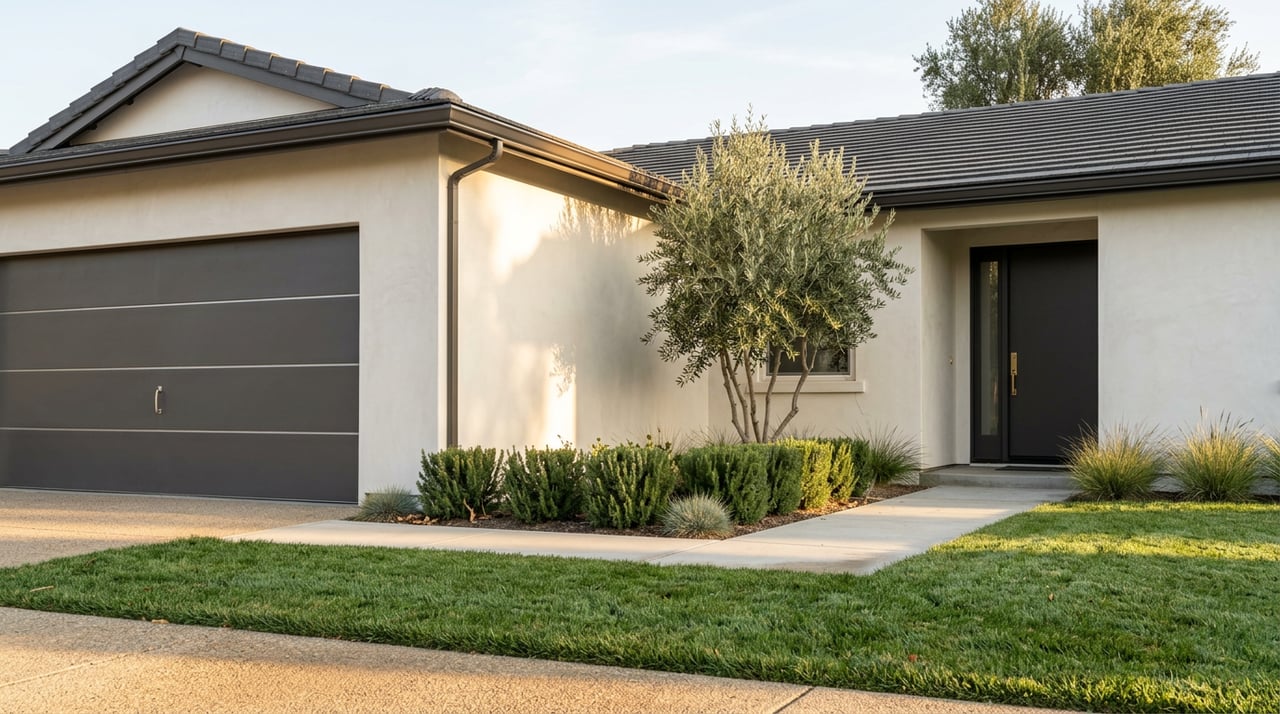
Every few weeks, a buyer comparing East Contra Costa options lands on two nearly identical listings, one just inside Oakley, one a few miles south in Brentwood, and the Oakley one is priced $30,000 to $50,000 lower for what looks like the same house. The instinct is to treat that gap as free money. It usually isn't, and the reason has nothing to do with the house itself.
The Price Gap Is Real, Just Smaller Than It Looks
Oakley's citywide numbers back up the "cheaper" reputation. Over the six months through late August 2026, the median sold price across Oakley closings came in at $667,000, with the middle half of sales landing between $588,000 and $770,000, and a median of $322 per square foot. Earlier in the year the number ran even softer, with March 2026 closings posting a median of $635,000, down roughly 5% from a year earlier. Oakley has spent most of 2026 as a relatively soft, buyer-tilted market rather than a hot one.
Brentwood generally prices above that band across its overall housing stock, largely because it built out earlier and carries more inventory in the larger, newer-construction tiers that command a premium. But the gap between the two cities is narrower than the "Brentwood is the nicer, pricier one" story suggests, especially near the border the two cities share.
Here's where it gets confusing for buyers cross-shopping the two markets. Within Oakley alone, prices stretch from older resales in Old Town Oakley up through the newer product in Summer Lake, the city's most recognized master-planned community, where builders like De Nova Homes have been putting up newer floor plans on the north side of town that compete directly with Brentwood's own new-construction tracts. Meanwhile, some of the marketing for "new homes in Brentwood starting in the $600Ks" points to communities that sit inside Oakley or Antioch city limits, not Brentwood proper. A chunk of what gets advertised as Brentwood pricing is really Oakley's price band wearing a Brentwood label, which means the sticker-price gap you're comparing may not even be comparing the two cities you think it is.
The Tax Bill Flips the Story
This is the part that catches buyers off guard after they've already fallen for the lower number.
California's baseline is simple on paper: Proposition 13 caps the base property tax rate at 1% of assessed value, and Contra Costa County adds voter-approved bond debt on top, which typically lands the new-buyer effective rate somewhere around 1.1% to 1.3% of purchase price countywide. That part barely varies by city.
What does vary is what gets layered on top in newer subdivisions. Community Facilities District special taxes, better known as Mello-Roos, fund infrastructure like roads, schools, and parks in developments where standard tax revenue wasn't enough to build it. They're not based on your home's value. They're a fixed dollar amount tied to the parcel, and they typically run $1,200 to $3,500 a year in the newer tracts of both Oakley and Brentwood, lasting anywhere from 20 to 40 years until the underlying bonds are repaid.
Add that layer to a city-level snapshot and Oakley's tax picture stops looking like the automatic bargain the sale price implies. One property tax dataset puts Oakley's median effective property tax rate at 1.55%, above both the county's typical new-buyer range and the California state median of 1.21%, with a median annual bill of $6,697. Other datasets built from broader Census estimates put Oakley closer to 0.98%. That spread isn't a contradiction to untangle. It's the point. Effective rate is parcel-specific, driven by when a home was last reassessed and whether it sits inside an active CFD, not something you can read off the city name. A newer home in Summer Lake with an active Mello-Roos assessment and a decades-old resale in Cypress Grove or Magnolia Park with none can carry very different tax bills despite sitting inside the same city limits.
Run the math on a specific pair of listings and the $40,000 price advantage Oakley showed on paper can shrink to a few thousand dollars a year, or flip entirely, depending on which subdivision and which tax lien attach to the actual parcel.
The Commute Upgrade That Still Isn't Here
Part of Oakley's appeal against Brentwood is positional. Oakley sits slightly west, which shaves a little off drive times toward the Highway 4 corridor and the Antioch Bridge route north. But the bigger commute story that gets repeated to Oakley buyers, a future passenger-rail platform putting downtown Oakley within a short train ride of downtown Oakland, has been "almost here" for a long time.
- 2018: the project received partial funding through the state's Transit and Intercity Rail Capital Program.
- Original target: platform completion by 2022.
- By March 2023: the timeline had slipped to the third quarter of 2024, with the station set to replace the existing Antioch-Pittsburg stop.
- As of the most recent public update in July 2025, groundbreaking on the platform itself was pushed to the first quarter of 2026, the fourth completion target since the project was first funded.
- In November 2025, the rail service itself was rebranded from Amtrak San Joaquins to Gold Runner, so buyers researching this project under its old name may not realize it's the same line.
Until that platform is built and running, the actual daily commute out of Oakley runs through Highway 4 west toward Antioch, Pittsburg, and the I-80 corridor, or Highway 160 north across the Antioch Bridge toward Sacramento, or a drive to the eBART station in Antioch with a bus connection covering the rest of the trip into Oakley. None of those routes are the one-seat train ride that gets described as Oakley's commute advantage. If a buyer is pricing that advantage into the decision to choose Oakley over Brentwood, they're budgeting for a convenience that has missed its own completion date four times running.
What This Means If You're Choosing Between the Two
Compare the full monthly number, not the list price. That means principal and interest, the base tax rate, any HOA dues, and the actual CFD line item pulled from the specific parcel's tax bill or preliminary title report, not an assumption based on which city the address sits in. A resale in an older Oakley tract with no active Mello-Roos can beat a newer Brentwood home with a live CFD assessment, and the reverse is just as true.
For commute, budget today's Highway 4 and eBART-bus reality rather than a train platform that hasn't broken ground yet. If the station opens, it's a genuine upside. Treating it as already priced into your daily life before there's a funded, un-slipped start date is how buyers end up disappointed a year or two into ownership.
FAQ
Is Oakley definitely cheaper than Brentwood? On the citywide median, usually yes. Oakley's six-month median sold price sits in the mid-$600,000s as of August 2026, and Oakley has generally run below Brentwood's overall price tier through 2026. Once you add the actual tax bill for a specific address, especially anything inside a newer CFD tract, that gap can shrink or disappear.
Does the future Oakley train station affect what I should pay today? Not yet. The platform has slipped from a 2022 target to 2024 to a first-quarter-2026 groundbreaking, per the most recent public timeline. Until it's built and running, plan around Highway 4, Highway 160, or the eBART bus connection through Antioch, not a projected train commute.
How do I find out if a specific address carries Mello-Roos? The special tax lien appears on the annual property tax bill under special assessments, itemized by district name, and it should also show up on the preliminary title report once you're in escrow. Ask your agent to pull it before you write an offer, not after.
Comparing a specific Oakley listing against a specific Brentwood one takes more than two list prices side by side. It takes the actual tax bill, the actual CFD status, and an honest read on which commute route you'll be driving this year, not the one that might exist someday. If you're weighing homes in both cities and want that comparison run on real numbers instead of city-level averages, The Bermudez Team can pull the tax history and CFD status on the specific addresses you're considering and walk through what the full monthly picture actually looks like.